
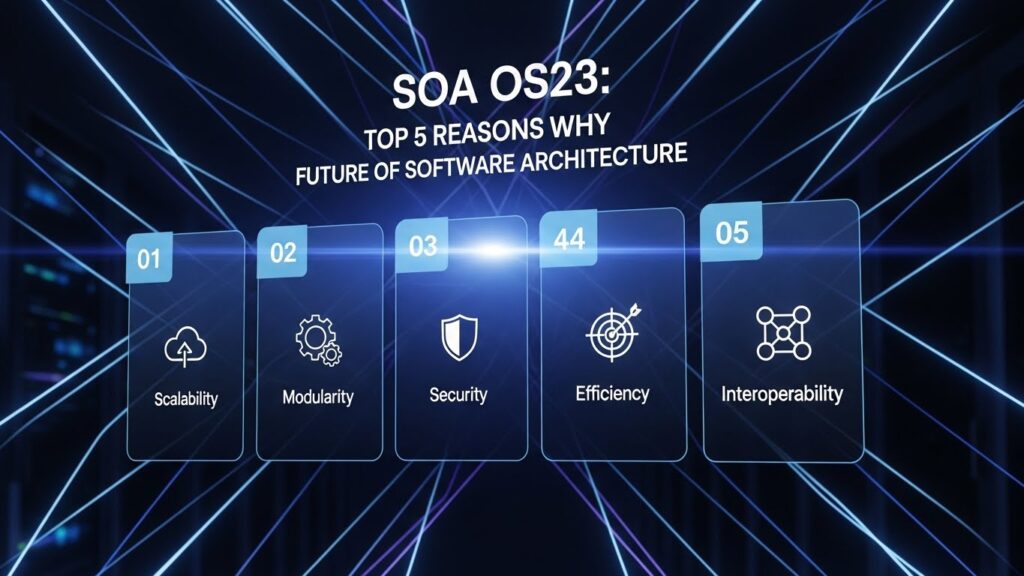
The landscape of software architecture is evolving at an unprecedented pace. Among the innovations shaping this future, SOA OS23 stands out as a beacon of transformation. But what exactly makes it so crucial for modern enterprises? As organizations strive to become more agile and responsive, adopting new architectural paradigms becomes essential. Enter SOA OS23—a framework that promises flexibility, scalability, and improved collaboration.
In this blog post, we’ll explore the top five reasons why SOA OS23 is set to redefine the way businesses approach software development. With technological advancements at its core and numerous success stories backing its effectiveness, understanding SOA OS23 could be your next big leap into the future of software architecture. Get ready to dive deep into this exciting realm!
What is SOA OS23?
SOA OS23, or Service-Oriented Architecture Operating System 2023, is a modern architectural framework designed to enhance software development processes. It emphasizes the creation and integration of loosely coupled services that can communicate over various networks.
At its core, SOA OS23 allows organizations to build applications from independent components. These components can be updated or replaced without disrupting the entire system. This modular approach fosters agility in response to changing business needs.
The architecture focuses on interoperability and reusability, enabling developers to leverage existing resources more effectively. By utilizing standardized protocols for communication between services, SOA OS23 streamlines collaboration across diverse platforms.
This innovative framework supports scalability and adaptiveness in an ever-evolving technological landscape. As businesses seek efficient ways to deliver value quickly, understanding SOA OS23 becomes increasingly vital for staying competitive.
Benefits of SOA OS23
SOA OS23 brings a multitude of benefits that can transform software architecture. One key advantage is its flexibility. This framework allows for easy integration with various technologies, making it adaptable to changing business needs.
Scalability is another significant benefit. Organizations can grow their systems without overhauling existing infrastructure, enabling them to respond quickly in dynamic markets.
Moreover, SOA OS23 promotes reusability of components. By leveraging existing services, companies save time and resources on development efforts while enhancing overall efficiency.
Increased collaboration among teams becomes achievable as well. With clear communication protocols and defined interfaces, developers from different departments can work together seamlessly.
SOA OS23 enhances data management capabilities by facilitating real-time access to information across multiple platforms. This leads to better decision-making processes based on accurate insights.
Advancements in Technology
The landscape of software architecture is rapidly evolving. SOA OS23 embraces cutting-edge technologies like microservices, cloud computing, and AI integration. These advancements create a more flexible and scalable environment for businesses.
Microservices allow developers to build applications as a suite of small services. Each service can operate independently while communicating over well-defined APIs. This modular approach enhances agility in development cycles.
Cloud computing further supports this evolution by providing on-demand resources. Organizations can scale their operations without heavy upfront costs or infrastructure investments. The pay-as-you-go model promotes efficiency.
AI plays a vital role too. It optimizes workflows, predicts system needs, and improves user experiences through data analysis and machine learning algorithms.
These technological strides enable SOA OS23 to be adaptable, efficient, and ready for the challenges of tomorrow’s digital landscape.
Case Studies and Success Stories
Numerous organizations have successfully adopted SOA OS23, showcasing its transformative potential. For instance, a major retail chain integrated this architecture to enhance its supply chain management. As a result, they improved inventory tracking and reduced overhead costs significantly.
Another notable case involves a healthcare provider that implemented SOA OS23 for better patient data management. This led to faster access to medical records and streamlined communication between departments. The outcome was not only efficiency but also an increase in patient satisfaction.
Similarly, a financial institution leveraged the modularity of SOA OS23 to launch new services swiftly. By decoupling their system components, they achieved quicker turnaround times and enhanced customer experience.
These examples illustrate how diverse sectors are reaping benefits from adopting SOA OS23 as their foundational architecture strategy. The adaptability of this approach allows businesses to stay competitive in rapidly changing environments.
Implementation Challenges and How to Overcome Them
Implementing SOA OS23 can present several challenges. Resistance to change is often a significant hurdle. Teams may feel comfortable with existing systems and hesitant to adopt new methodologies.
Another challenge lies in the integration of legacy systems. Many organizations rely on older technologies, making it difficult to transition smoothly into a service-oriented architecture.
Skill gaps within teams can also impede progress. Not all developers are familiar with SOA principles or practices, which can slow down implementation.
To tackle these issues, training sessions can bridge knowledge gaps effectively. Encouraging collaboration among team members fosters an environment where questions are welcomed and solutions are shared.
Additionally, creating a phased approach to implementation allows for gradual adaptation. This method enables teams to adjust without overwhelming them with drastic changes all at once. By addressing these obstacles thoughtfully, organizations can pave the way for successful adoption.
Future Predictions for Software Architecture
The landscape of software architecture is evolving rapidly. As businesses embrace digital transformation, SOA OS23 is at the forefront of this change.
Microservices will continue to dominate. They’re agile and promote faster deployments. This shift allows companies to scale their applications efficiently.
AI integration will become more common in software design processes. Intelligent systems can analyze user behavior, optimizing performance in real-time.
Cloud-native approaches will gain traction too. Organizations are moving away from traditional infrastructures to leverage flexibility and cost-effectiveness offered by cloud solutions.
In addition, security protocols will advance significantly. With increasing cyber threats, architects must prioritize robust security measures right from the design phase.
Collaboration tools for remote teams will play a crucial role in shaping future architectures. As workforces adapt to hybrid models, seamless communication becomes essential for project success.
Conclusion
SOA OS23 represents a significant shift in software architecture. As organizations increasingly demand flexibility and scalability, this approach addresses those needs effectively. The benefits are clear: enhanced interoperability, reduced costs, and faster deployment times.
Technological advancements such as AI integration and cloud computing play a fundamental role in the success of SOA OS23. These tools not only streamline processes but also enable companies to adapt quickly to changing market demands.
Real-world case studies illustrate its impact on various industries. Companies that have embraced SOA OS23 report improved collaboration among teams, better resource allocation, and increased user satisfaction.
Nevertheless, implementing this architecture is not without challenges. Organizations often face resistance to change or difficulty integrating existing systems. However, with proper planning and training, these hurdles can be overcome.
Looking ahead, one can predict continued growth for SOA OS23 as it evolves alongside emerging technologies like machine learning and IoT solutions. This evolution will likely drive even more innovation within software development practices.
The future of software architecture leans heavily towards adaptable frameworks. Embracing this trend could very well position businesses for long-term success in an ever-evolving digital landscape.